Niching Down Too Hard
Everyone told you to niche down. Pick a lane and stay in it. Get specific and stop trying to talk to everyone. So you did. You got so specific that your entire brand now speaks to left-handed female entrepreneurs in coastal Florida who make artisanal hot sauce and need help with their quarterly tax filings. Congratulations. You have cornered a market of four people and two of them are your cousins. This post is about what happens when niching down stops being a strategy and starts being a personality disorder.
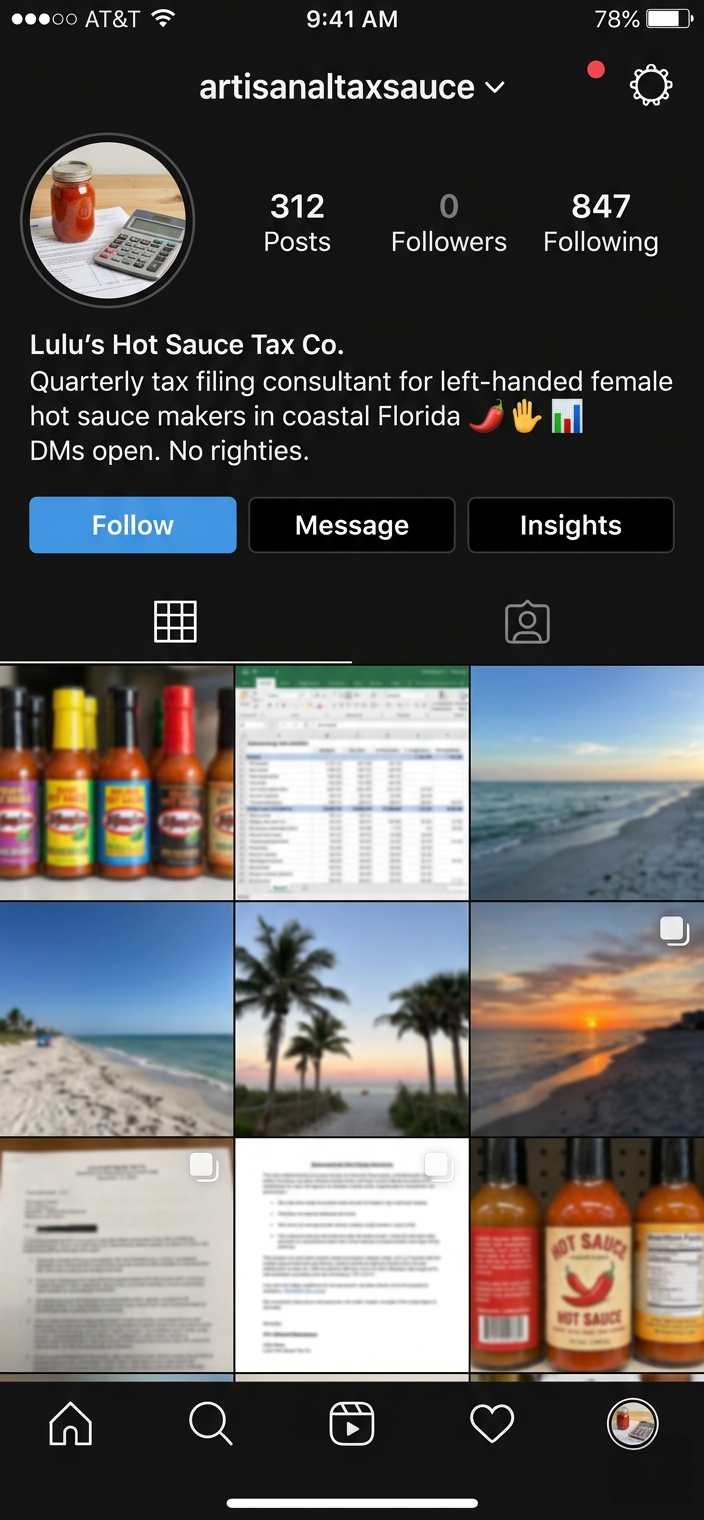
You're The Only One Who Finds It Interesting
There is a version of niching down that feels like genius from the inside and looks like a questionable disaster from the outside. The positioning seems airtight. The messaging is consistent. The visuals look immaculate. And yet there are six potential clients in the entire world who qualify. So instead of finding more clients, you write more content. Longer posts, deeper dives, more nuance, more explanation, because if you just explain it well enough surely someone will get it.
They won't.
You can be so specific that you're technically correct and practically invisible.
A niche that only you understand is not a niche, it's a concept.
Writing 4000 words about something three people care about is not content strategy, it's a journal.
If your ideal client has to be explained in four sentences, reconsider.
The most narrow niche in the world still needs an audience large enough to sustain a business.
One person who gets it (especially if that one person is you) is not a business model.
Read More → Defined By Default
The Content Gets Unhinged
This is where the chaos really starts. Because once the niche is too small to sustain itself, the content has to work harder. So it gets longer. More specific. More passionate. More convinced that the right angle is just around the corner. You're writing 1,500 word Instagram captions about the regulatory history of artisanal hot sauce labeling and tagging it #SmallBusiness. You have seventeen saves and fifteen of them are you checking to see if anyone saved it.
The content becomes a deeper and deeper explanation of something fewer and fewer people asked about.
Every post assumes a level of investment the audience never agreed to.
The passion is real but passion is not the same as relevance.
You start writing for the niche instead of for the person who has the problem.
At some point, the content stops being marketing and starts being a TED talk nobody signed up for.
This is usually the moment people think they need better content, but what they really need is better positioning. The Brand Blueprint is where that starts. It maps everything you need to know about what your content should be doing. When that exists, you stop writing into a void and start writing for people who are already looking for what you do. The content gets shorter, clearer, and more effective because it finally makes sense.
The Right Kind of Specific
The answer is not to go broad. Vague brands don't convert either. The difference is niching around the problem you solve instead of the identity of the person who has it. One is useful, the other is a personality quiz.
Niche around what you fix, not who you imagine fixing it for.
Get specific about your point of view, not your client's zip code and star sign.
Test it by asking if a stranger could understand your brand in one sentence.
The right niche makes people say "that's me" not "I wonder who that's for."
Broad enough to have an audience, specific enough to mean something.
When the positioning is right you don't have to work that hard. The right people find you, understand you, and don't need four paragraphs of context before they get it. That's what a niche is supposed to do, not narrow your audience into oblivion, but make the right audience feel like you're already talking to them.
Read More → The Right People
At Relative Media we help brands find the version of specific that actually works. Clear enough to attract the right people, but open enough to build a real business on. If your niche is starting to feel like a very niche problem, start with a Consult Deluxe and let's find the positioning that fits.
Read More